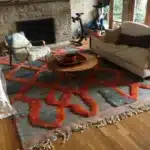
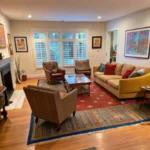
Two rugs are better than one. Here is everything you need to know to make them work together beautifully.
I still remember the living room that changed the way I think about floors.
A client an architect had asked me to help her source rugs for the new home she had just finished designing for herself. The space was beautiful: high ceilings, raw plaster walls the colour of warm sand, light flooding in from a south-facing courtyard. But the floor felt cold. Bare. Like a beautiful room waiting to happen.
She had already bought a large jute rug neutral, flat-woven, unpretentious and laid it under her sofa and coffee table. It was fine. It grounded the space. But it did not sing.
When I arrived with a handwoven Berber rug from our collection at Charaf Designs a bold, geometric piece in warm ivory and deep charcoal I laid it on top of the jute at a slight angle, fringe spilling toward the sofa. I stepped back.
The room transformed. The jute became a canvas. The Berber became a painting. Together, they made the whole space feel collected, layered, alive like it had been built up over years of travel rather than furnished on a single Saturday.
My client looked at it for a long moment and then said, very quietly: “That’s it.”
That is the magic of layering rugs. And in this guide, I am going to teach you exactly how to do it.
A handwoven Berber rug from Charaf Designs layered over a jute flatweave the combination that started it all.
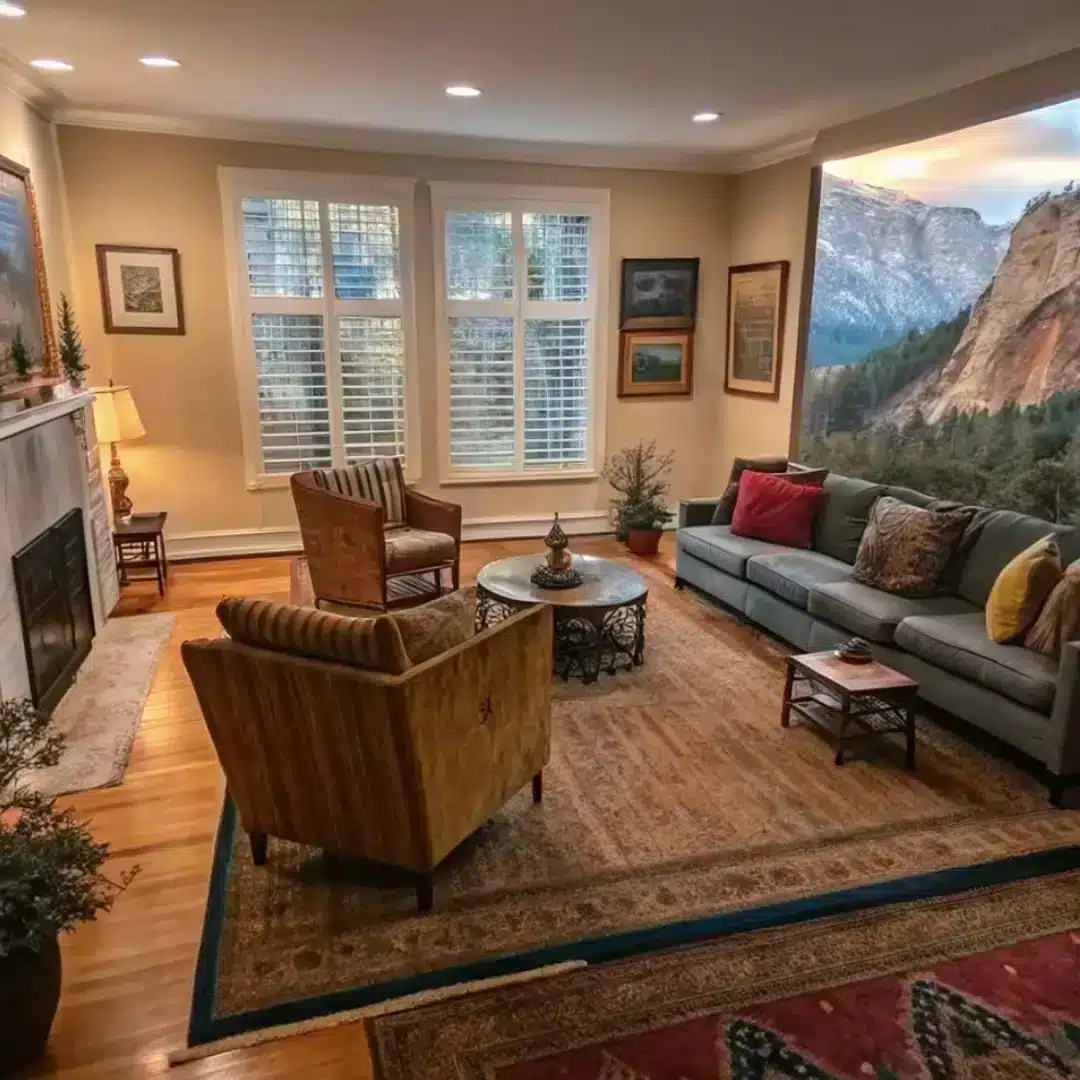
Why Layer Rugs at All?
Before we talk about how, let us talk about why.
Most people think of a rug as a single, complete object you buy it, you lay it down, done. And in many rooms, that works perfectly well. But there are moments where one rug simply cannot do everything you need it to do. Maybe it is not quite the right size. Maybe the room is too large and a single rug leaves it feeling empty. Maybe you own a beautiful vintage piece that is too special to put on the floor alone, without something to protect and frame it.
Rug layering solves all of these problems at once. It adds warmth, depth, and texture that a single rug cannot achieve. It gives large, sparsely furnished rooms an intimacy that no amount of additional furniture can replicate. And it is one of the most cost-effective ways to achieve a genuinely designer level result because you are working with what you already have and building on it, rather than starting from scratch.
There is also a deeper reason, one that connects directly to the philosophy behind everything we make at Charaf Designs. The most beautiful interiors in the world do not look like they were bought on a single shopping trip. They look gathered. Accumulated. Layered rugs are the fastest way to create that feeling in a living room the sense that your home has been built up over time, with intention and with care.
In 2026, this aesthetic sometimes called the “collected” interior is the dominant direction in home design. And rugs are at the heart of it.
“A home should not only be functional but also reflect the personality and style of its owner.”— Charaf, Founder of Charaf Designs
The Golden Rule: Start With the Base
Every great layered floor begins with the same thing: a large, neutral base rug. This is the foundation the canvas on which everything else is painted.
Think of the base rug as the quiet one in the room. Its job is not to be noticed. Its job is to make everything else look better. It anchors the furniture, covers the floor, and sets a neutral stage for the rug that will be layered on top.
What makes a great base rug?
The best base rugs share three qualities: they are large, they are relatively flat, and they are neutral in colour. Natural fibre rugs jute, sisal, seagrass, cotton are perfect for this role. They have a beautiful organic texture that adds warmth without demanding attention, and they are durable enough to handle the weight and traffic of a living room.
At Charaf Designs, our flatweave Berber kilims are among the most popular base rugs in our collection. Their relatively low pile means any top rug lies cleanly on top of them without bunching or sliding. And their natural wool tones warm ivory, sandy cream, earthy beige work as the perfect neutral foundation for almost any top rug you choose to layer.
How big does the base rug need to be?
The base rug should be large enough to extend under the front legs of all your sofas and chairs or ideally under all the furniture legs in the seating area. In a standard living room, this usually means a minimum of 240 × 300 cm (8 × 10 ft). In a larger room, a 270 × 365 cm (9 × 12 ft) or even bigger makes more sense.
The single most common mistake in rug layering is starting with a base that is too small. If your base rug does not fully anchor your furniture, the whole arrangement floats and looks unresolved. When in doubt, go larger.
Pro Tip Before you buy, lay painter’s tape on the floor in the shape of your intended rug. Live with it for a day or two. This is the single best way to test proportions before spending money — and it saves a lot of regret.
Choosing Your Top Rug: The Star of the Show
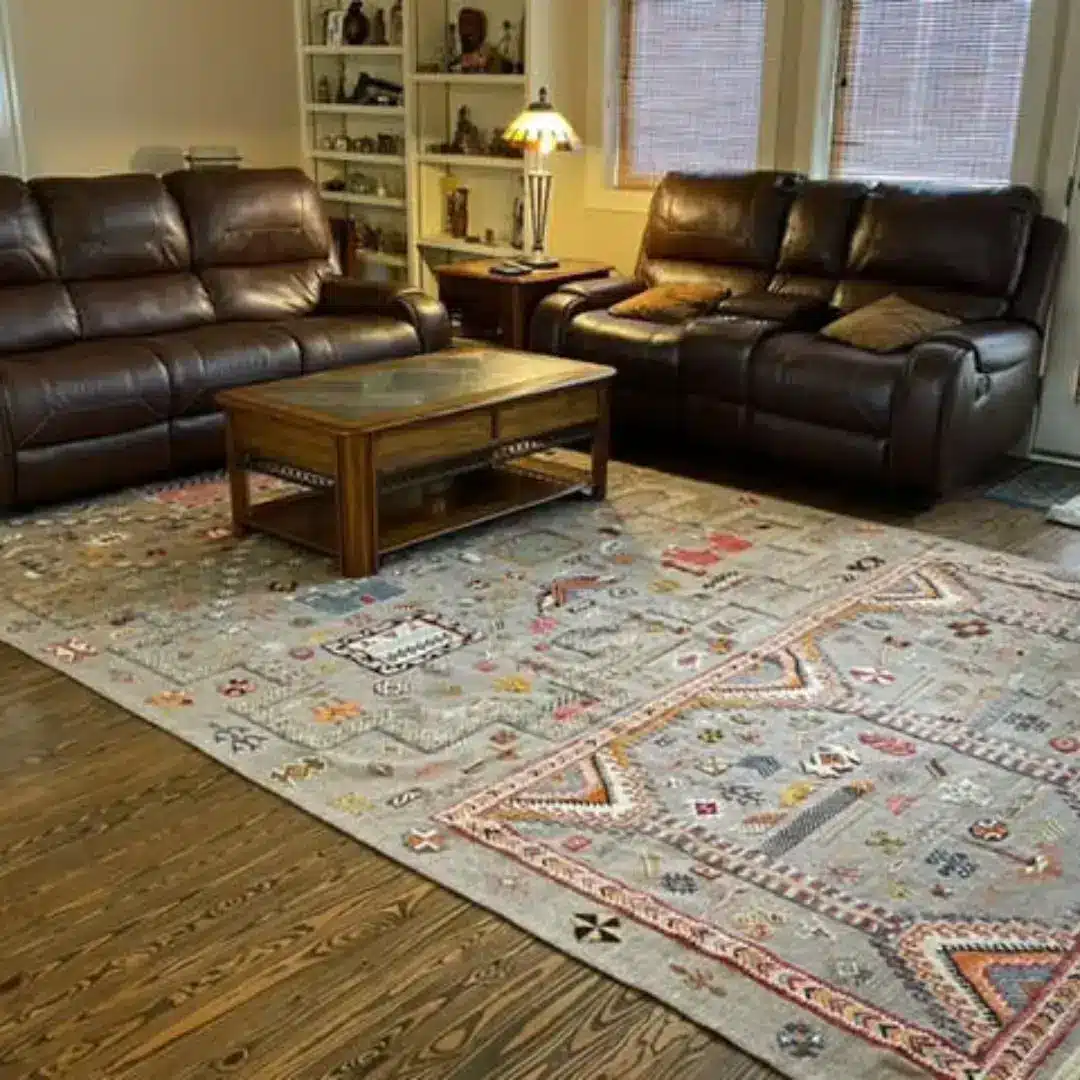
If the base rug is the canvas, the top rug is the painting. This is where your personality enters the room. This is the rug people will notice, compliment, and ask about. Choose it accordingly.
The top rug should be significantly smaller than the base you want a clear border of base rug visible on all sides, like a frame around a picture. It should have more character: a bolder pattern, a higher pile, a more distinctive colour or weave. And it should tell a story.
At Charaf Designs, our handwoven Berber and Moroccan rugs are born to be top-layer rugs. Each one is made by hand in Marrakech every geometric pattern, every stripe, every knot carries the tradition of Berber craftsmanship that has been passed down through generations across the Atlas Mountains. When you put one of these rugs on your living room floor, you are not just choosing a textile. You are choosing a piece of cultural heritage.
The Berber or Moroccan rug our signature top layer
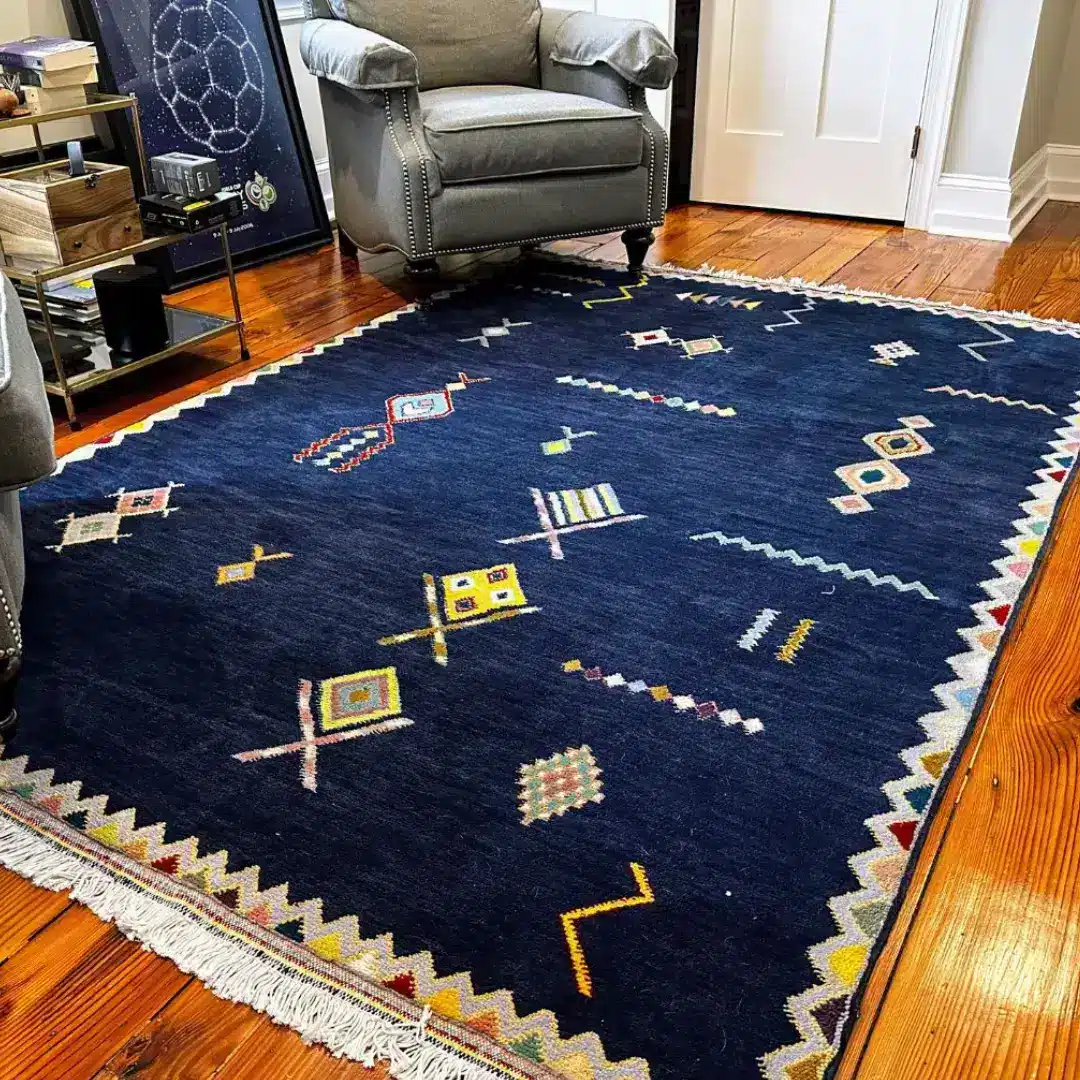
Our handwoven Berber rugs rich in geometric pattern, warm in colour, deeply tactile are designed to be seen against a plain background. The bold diamond motifs, tribal stripes, and intricate field patterns of a Moroccan rug come alive when they have a quiet, neutral base beneath them. This is exactly how these rugs have been displayed in Moroccan homes and riads for centuries.
The vintage or antique rug
Vintage rugs are among the most beautiful things you can put in a living room and among the trickiest to use, because they are typically thin, fragile, and come in non-standard sizes. Layering solves both problems at once. A large jute or flatweave base underneath gives the vintage rug a pad of protection, raises it slightly off the floor so it is properly visible, and frames it so that its irregular size reads as a design choice rather than a mistake.
The round rug on a rectangle
One of the most dynamic layering combinations is a round accent rug on top of a rectangular base. The contrast in shape creates immediate visual interest the eye moves between the shapes, the room feels composed rather than accidental. This works especially well in front of a fireplace or under a circular coffee table.
The Size Guide: Getting the Numbers Right
Proportions are everything in rug layering. Get them wrong and the arrangement looks accidental. Get them right and the room looks like it was designed by someone who really knows what they are doing which, after reading this section, you will.
The frame rule
The most important rule in sizing is this: the base rug must remain visible on all sides of the top rug. This visible border typically 25 to 40 cm wide is what creates the “framing” effect that makes both rugs look intentional. If the top rug extends all the way to the edges of the base, the layering disappears and you just have two rugs on top of each other.
| Top rug size | Minimum base rug size | Ideal exposed border |
|---|---|---|
| 120 × 180 cm (4 × 6 ft) | 180 × 270 cm (6 × 9 ft) | 25–30 cm |
| 150 × 240 cm (5 × 8 ft) | 240 × 300 cm (8 × 10 ft) | 25–35 cm |
| 180 × 270 cm (6 × 9 ft) | 270 × 365 cm (9 × 12 ft) | 30–40 cm |
| 240 × 300 cm (8 × 10 ft) | 300 × 425 cm (10 × 14 ft) | 35–45 cm |
Custom sizing is one of Charaf Designs’ greatest strengths. Because we produce every rug by hand in our Marrakech workshop, we can make any rug to any dimension which means if you need a top rug that is exactly 170 × 250 cm to work with a base you already own, we can make it. Just send us your dimensions via WhatsApp and we will advise from there.
Order 10–15% Extra When ordering from Charaf Designs for a layering project, consider whether you might want to rotate or reposition the rug seasonally this can affect whether you need a rug pad cut to size or a slightly different top rug dimension. Message us and we will help you plan it.
The 5 Combinations That Always Work
After years of supplying rugs to homeowners, interior designers, and architects across the world from our studio in Marrakech, I have seen what works. Here are the five combinations that never fail.
Combination 01
The Marrakech Stack
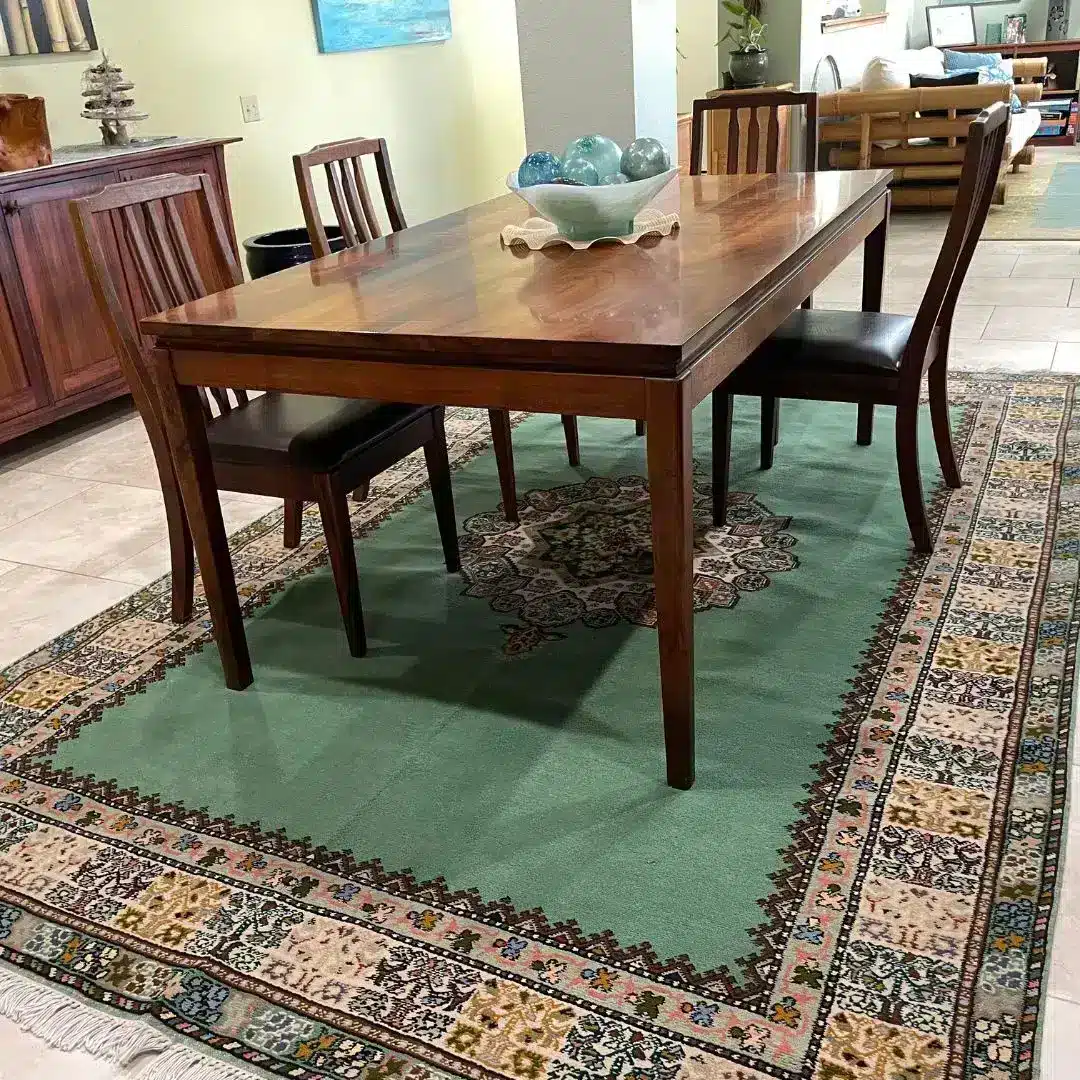
A large jute or sisal flatweave base with a handwoven Berber or Beni Ourain rug on top. Warm, organic, and timeless. Works in every living room style from minimal to maximalist. This is the combination that started the layered rug trend and it is still the most beautiful.Charaf Designs signature
Combination 02
The Modern Nomad
Plain wool base in ivory or warm grey with a bold geometric kilim on top, placed at a 30-degree angle. The angle is the key detail it creates dynamic energy and makes the whole arrangement feel deliberate rather than default.Best for open-plan rooms
Combination 03
The Quiet Maximalist
A neutral base with a subtle repeat pattern diamonds, gentle stripes under a richly coloured Moroccan rug with a complex field pattern. The patterns do not compete because one is a whisper and one is a statement.Best for bold personalities
Combination 04
The Tonal Sanctuary
Two rugs in the same colour family, different textures. A flat-woven cream wool base with a high-pile ivory shag or boucle on top. Deeply calm, spa-like, perfect for the 2026 “sanctuary” interior aesthetic. Let the Moroccan lamps do the warm work overhead.Best for bedrooms & calm spaces
Combination 05
The Vintage Revival
A large, plain sisal or jute base with a one-of-a-kind vintage Moroccan or Persian rug centred on top, slightly off-axis. The vintage piece gets the padding and framing it deserves. The room looks like it has been a hundred years in the making.Best with antique pieces
Bonus
Over Carpet
Existing carpet as the base, with a bold flatweave or Berber kilim on top. A brilliant solution for renters, or for anyone who wants to refresh a carpeted room without replacing the floor. Choose a rug with a firm, flat back so it does not bunch. Renter-friendly
Not sure which combination works for your space?
Send me a photo of your living room and I will personally recommend the right rug pairing from the Charaf Designs collection.
Placement: Exactly Where to Put Each Rug
Once you have your two rugs, the question is where, precisely, to position them. There are three approaches, each creating a different feeling in the room.
Centred and straight
The most classic approach. The base rug sits under all the furniture in the seating area; the top rug is centred precisely beneath the coffee table, aligned with the edges of the room. The result is composed, structured, and formal. It works beautifully in traditional and transitional interiors.
Angled top rug
My personal favourite and the approach that transforms a room from “furnished” to “designed.” The base rug sits straight, aligned with the room. The top rug is placed at 15 to 45 degrees on top of it. The diagonal creates energy. The eye moves across the room. The whole arrangement feels dynamic, artistic, intentional. This is the placement that makes interior designers stop and take photographs.
It works best in relaxed, eclectic, and maximalist interiors and it is particularly beautiful with a boldly patterned Moroccan rug whose geometric motifs dance at an angle against the neutral base.
Zone-defining placement
In an open-plan living space where the kitchen, dining, and seating areas all share the same floor use two layered rugs to carve out a distinct conversation zone. The base rug defines the territory. The top rug, positioned under or just in front of the coffee table, marks the heart of the zone. Furniture legs on the base rug anchor the whole arrangement.
This is one of the most practical uses of rug layering, and one that interior designers and architects rely on constantly in open-plan residential projects.
The 5 Mistakes That Ruin a Layered Rug Look
Knowing the rules is useful. Knowing what breaks them is essential. Here are the five most common errors I see and exactly how to avoid each one.
- Matching pile heights. When two rugs have the same pile height, they flatten each other. The texture disappears, the layers merge, and you lose the whole point of layering. Always pair a flat or low-pile base with a higher-pile or more textured top rug, or vice versa. Contrast in texture is what makes the layers readable.
- Pattern on pattern with no mediator. Two heavily patterned rugs will fight each other — the eye does not know where to land and the room feels chaotic rather than rich. One rug must be the calm, one must be the statement. If your top rug is boldly patterned a Berber geometric, a Moroccan diamond field the base should be plain or very subtly textured.
- Top rug too large, base border invisible. If the top rug is so large that the base rug is barely visible around the edges, the framing effect disappears entirely. You simply have two rugs on the floor. The border of exposed base rug is the most important visual element in the whole arrangement protect it.
- No rug pad. A top rug without a rug pad between the layers will shift, bunch, and trip people. Use a standard pad under the base rug on a hard floor, and a thin gripper pad between the two rugs. This is not optional it is a safety issue as much as an aesthetic one, especially in homes with children or older family members.
- Top rug too small the postage stamp effect. A top rug that is too small in relation to the base rug and the furniture around it looks like an accident. It shrinks the room rather than enriching it. As a general principle: if you are unsure whether a top rug is large enough, go one size up. A rug that feels slightly generous always looks better than one that feels slightly mean.
Our Recommended Pairings from the Charaf Designs Collection
At Charaf Designs, we produce handwoven Berber rugs and kilims in Marrakech every piece made by hand, carrying the tradition and story of Moroccan craftsmanship into contemporary homes. Our collection covers both ends of the layering equation beautifully.
For the base layer
Our Berber flatweave kilims are exceptional base rugs. Flat-woven in natural wool, they have a low, dense pile that provides a stable foundation for any top rug. Their warm ivory, sandy cream, and warm grey tones act as the perfect neutral canvas. Available in custom sizes if you need a specific dimension for your layering project, we make it to order.
For the top layer
Our handwoven Berber pile rugs featuring bold geometric patterns, traditional tribal motifs, and the warm, earthy palette of the Atlas Mountains are made to be the focal point of a room. Each one is unique: no two rugs in our collection have exactly the same pattern or colouring, because they are made by hand. When you buy a top-layer rug from Charaf Designs, you are buying something that exists nowhere else in the world.
We also produce custom rugs to specification if you want a Berber rug in a specific colour, size, or pattern to pair with a base you already own, send us your requirements and we will create it.
The Floor That Tells a Story
I think about that architect’s living room in Casablanca sometimes. The way the Berber rug sat on the jute at its slight angle. The way the afternoon light caught the geometric knots. The way the room which had been fine before, perfectly functional suddenly felt like somewhere you never wanted to leave.
That is what layering does to a room. It does not just add a rug. It adds a dimension. It makes the floor feel like it has history like the two rugs found each other over years of travels and decisions, rather than being ordered in the same afternoon from the same website.
The truth is that the best interiors always look effortless. But effortless is the result of knowledge applied so completely that it becomes invisible. You know the rules now. You know the base comes first, the top rug is the star, the border must be visible, the textures must contrast, and the angle transforms everything.
Now go make your floor something worth talking about.
And if you want help choosing the right Moroccan rugs for your living room or want to see how our handwoven Berber collection would look layered in your specific space send me a message. I love seeing what people create.
Ready to build your perfect layered floor?
Browse the Charaf Designs rug collection or send me a photo of your space I personally guide every client to the right combination.
💬 WhatsApp: +212 694 848 682📸 @charafdesigns
Frequently Asked Questions
Can you layer two patterned rugs?
Yes but carefully. The key is ensuring one rug is clearly the dominant, complex pattern and the other is the subdued supporting act. A boldly patterned Berber geometric rug works beautifully on top of a very subtly patterned flatweave base provided the patterns are in the same colour family and at very different scales. Two equally bold patterns will fight each other. When in doubt, keep the base plain.
How do you keep layered rugs from sliding?
Two rug pads: a standard non-slip pad under the base rug (between the rug and the hard floor), and a thin rubber gripper pad between the two rugs. This combination keeps everything firmly in place even in high-traffic living rooms. Never skip the gripper between the layers it is both a safety measure and what keeps the arrangement looking crisp over time.
Can you layer rugs on carpet?
Absolutely. This is one of the best uses of rug layering it instantly transforms a carpeted room, covers dated carpet, and works brilliantly in rented properties where you cannot change the floor. Choose a flat-woven or low-pile top rug rather than a high-pile one, as very thick rugs can be unstable on a carpet base. A rug-on-carpet pad (specifically designed for this purpose) keeps everything in place.
What is the best base rug for layering?
A large, flat or low-pile rug in a neutral tone jute, sisal, flatweave wool, or cotton. The base should be quiet enough that it does not compete with the top rug for attention, and flat enough that the top rug lies cleanly on top without bunching. At Charaf Designs, our flatweave Berber kilims are a perfect base rug choice natural wool, low profile, beautiful neutral tones, and available in custom sizes.
Can you layer rugs in a small living room?
Yes you just need to scale down proportionally. In a small room, stick to thinner rugs in the same or closely related colour family. Avoid high contrast between the two rugs (which draws attention to the floor and can shrink the room visually). A small, low-pile flatweave base with a compact patterned Moroccan rug on top in tonal, warm colours adds depth and personality without making the room feel smaller.
How do I order rugs from Charaf Designs?
The easiest way is to message us directly on WhatsApp at +212 694 848 682 or on Instagram @charafdesigns. Tell us the dimensions of your room, what you already have on the floor, and the kind of feel you are going for. I personally respond to every message and will guide you to the right combination including custom sizing if needed. We ship worldwide from Marrakech.
Charaf — Founder of Charaf Designs