The backsplash is the soul of a room. It is the first thing that catches the eye, the surface that tells your story. And nothing tells it better than a tile made by human hands.
I still remember the moment that changed everything for me.
I was twelve years old, walking through the narrow alleys of the Marrakech medina with my grandfather. He stopped in front of an old riad and pointed at the wall beside the entrance — a mosaic of tiny, irregular tiles, each one a slightly different shade of cobalt blue. No two pieces were exactly the same shape. The grout lines wandered slightly off-grid. And yet the whole thing was breathtaking.
“These tiles are not perfect,” he said. “That is why they are beautiful.”
I never forgot that. Years later, when I founded Charaf Designs, that philosophy became everything — blending the ancient Moroccan craft of handmade tiles with the spaces where modern people actually live. Kitchens. Bathrooms. Living rooms. Restaurants. Offices.
If you are reading this, you are probably standing in front of a blank wall, dreaming about what it could become. Maybe you are a homeowner planning a kitchen renovation. Maybe you are an interior designer sourcing something that no catalogue can offer. Maybe you are an architect looking for a material with genuine soul.
Whoever you are — this guide is for you. Let me walk you through the most beautiful, trend-forward, and timeless handmade tile backsplash ideas for 2026.
Why Handmade Tiles Make the Best Backsplash
Before we dive into ideas and inspirations, let us talk about why handmade tiles are in a completely different category from what you find at a big-box home store.
A machine-made tile is engineered for consistency. Every tile is identical. The glaze is perfectly even. The edges are razor-sharp. It is efficient, it is affordable — and it is forgettable.
A handmade tile carries the memory of the hands that shaped it. The glaze settles differently in each piece, creating subtle variations in colour and sheen. The surface has a slight topography — a texture you can feel under your fingers. When light hits a wall of handmade tiles, it does not bounce back uniformly. It dances.
“We are seeing a clear shift away from overly polished and overly styled interiors — toward spaces that feel grounded and tactile. Natural textures, handmade surfaces, and materials that age beautifully are becoming the foundation, not just the finishing touch.”— Brad Ramsey, Interior Designer (StyleBlueprint, 2026)
This is exactly what 2026 interior design trends are confirming. The era of cold, sterile perfection is over. Homeowners, designers, and architects are choosing materials that have history, texture, and authenticity — and handmade tiles sit at the very top of that list.
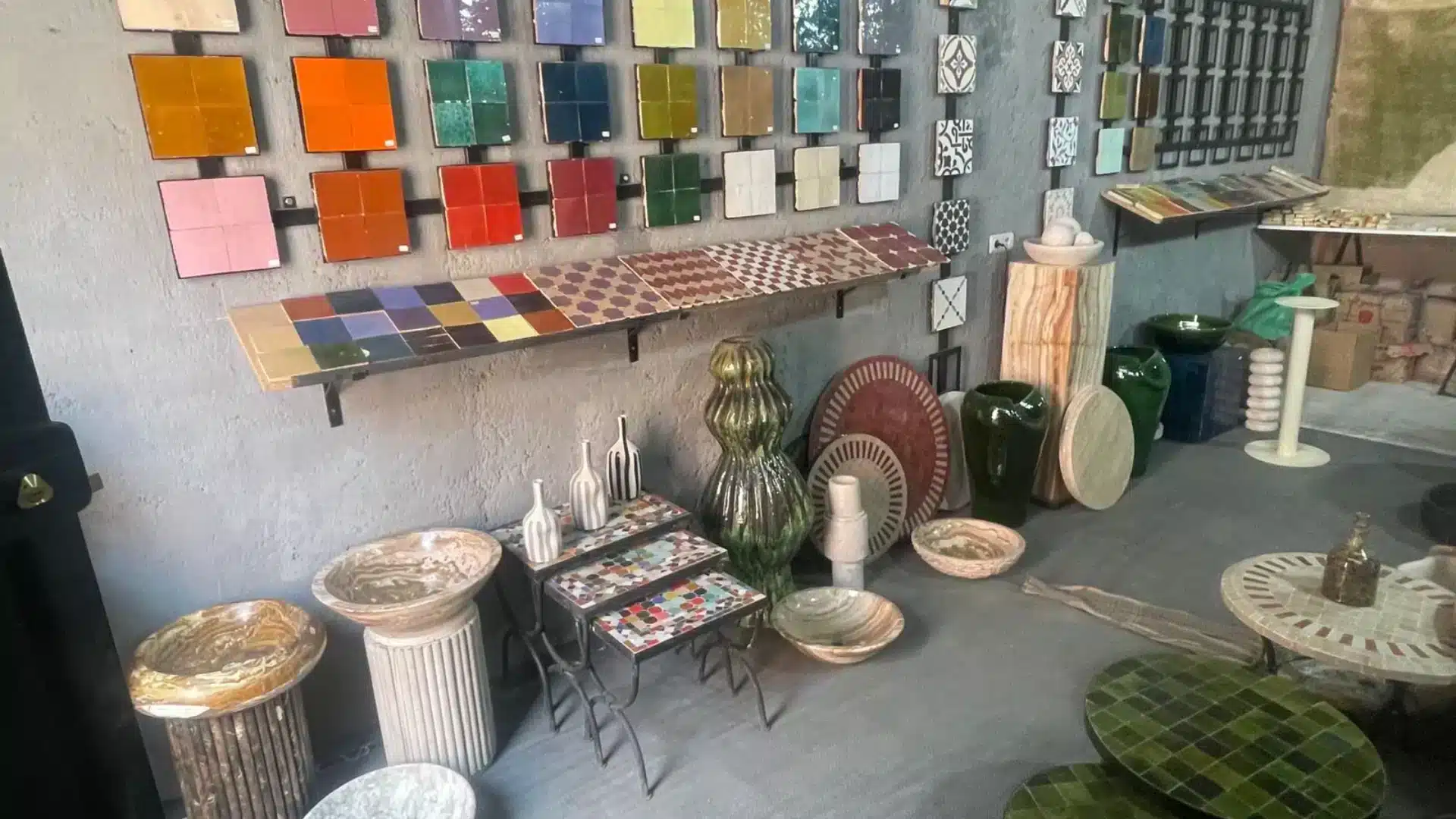
7 Stunning Handmade Tile Backsplash Ideas for 2026
1. The Zellige Kitchen Backsplash — Morocco’s Finest Gift to Modern Homes
If there is one handmade tile that has taken the interior design world by storm in the past few years, it is zellige. And in 2026, it is more sought after than ever.
Zellige (pronounced “zuh-leej”) is a form of terracotta tile coated with enamel glaze that is hand-cut from a fired slab. Each piece is irregular — slightly different in size, angle, and colour depth. The imperfection is not a flaw. It is the entire point.
In a kitchen, a zellige backsplash behind the stove or along the counter creates an effect that is simultaneously ancient and completely contemporary. Imagine a wall of deep forest green zellige catching the warm light from pendant lamps above your island. Or a soft ivory zellige that seems to glow at different times of day.
At Charaf Designs, we hand-produce zellige tiles in Marrakech using the same clay and traditional firing techniques that craftsmen have used for centuries — just reimagined for the colours and proportions that work in a modern kitchen.
Design TipFor a kitchen backsplash, pair deep-toned zellige (emerald, cobalt, terracotta) with natural wood cabinetry and unlacquered brass hardware. The contrast is stunning. Avoid pairing with high-gloss white cabinets — the tiles deserve a warmer backdrop to shine.
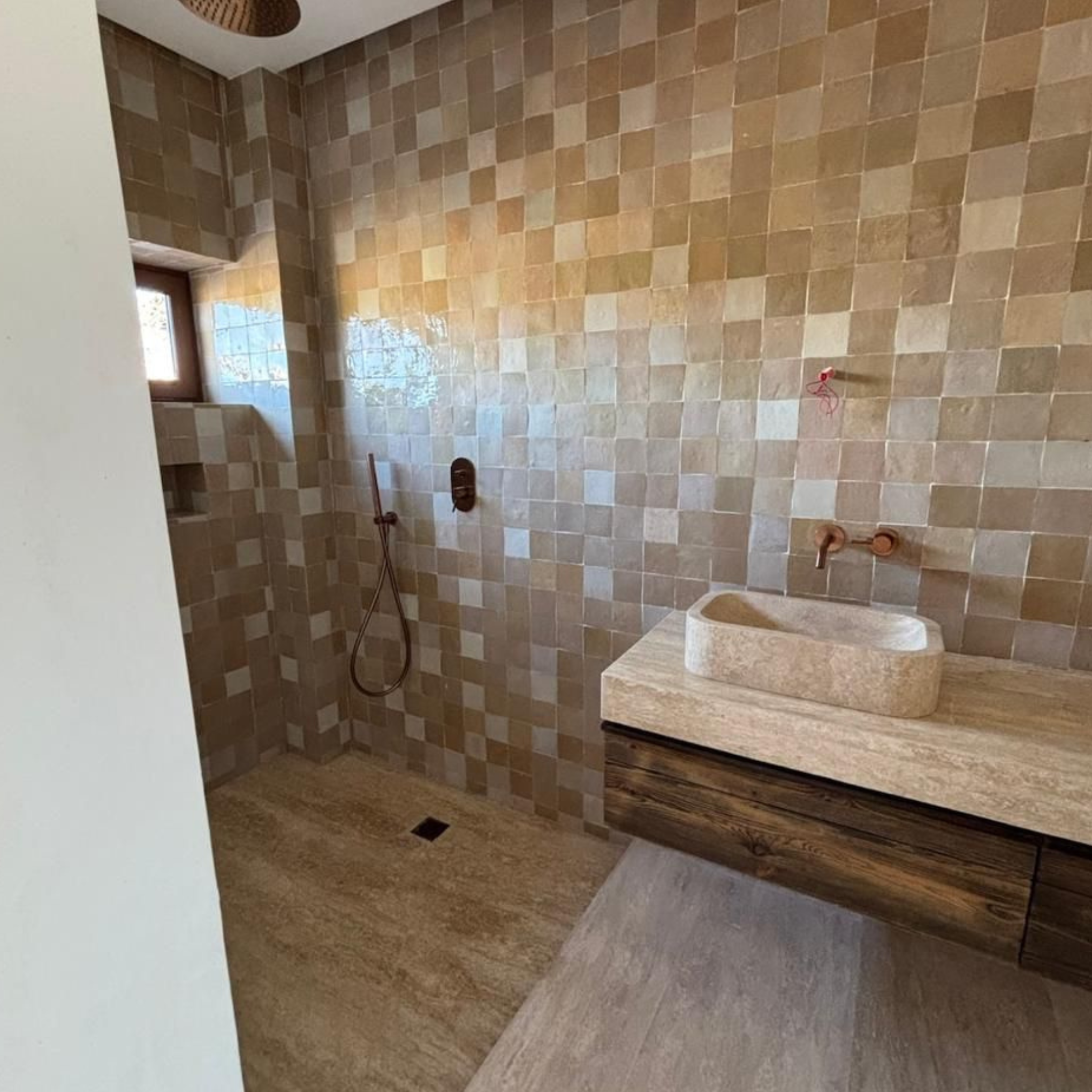
2. The Terracotta Statement Wall — Warm, Earthy, Timeless
Terracotta is having its biggest moment in a generation. And unlike some trends that feel temporary, terracotta’s warmth connects to something deeply human — the colour of earth, of clay, of every ancient city ever built in a warm climate.
A handmade terracotta tile backsplash brings an earthy warmth to a kitchen or bathroom that no paint colour can replicate. The natural variation in the clay means each tile reads slightly differently — some slightly redder, some more amber, some almost pink. Together, they create a wall that feels alive.
This works beautifully in open-plan kitchens that flow into living areas. The terracotta backsplash anchors the kitchen zone while tying into earthy soft furnishings — a Berber rug on the floor, a linen sofa nearby, woven lamp shades overhead.
3. The Bathroom Feature Wall — Turning a Functional Space Into a Sanctuary
The bathroom is no longer just a room you pass through. In 2026, designers are treating it as a sanctuary — and nothing transforms a bathroom more dramatically than a full feature wall of handmade tiles.
Behind the vanity, from floor to ceiling, a wall of handmade tiles creates the kind of visual richness you would find in a luxury riad or a boutique hotel in Marrakech. Choose a deep inky blue for drama. A soft sage green for calm. A warm ivory for a spa-like serenity.
The key with bathroom installations is the grouting. For handmade tiles, I always recommend a slightly tinted grout that complements the tile colour — never stark white, which fights the organic quality of the tile surface.
Professional Tip for Interior Designers: When specifying handmade tiles for a bathroom, order 10–15% extra beyond your measured square footage. Because each tile is unique, matching replacements years down the line is harder than with factory tiles. This also accounts for cuts and any breakage during installation.
4. The Arch or Niche — Framing Beauty Within Beauty
One of the most exciting trends emerging in 2026 is tiling unexpected architectural moments — arched niches, recessed shelves, the inside of a doorway. These are the spaces most people leave painted or plain, and the spaces where handmade tiles create the most spectacular impact.
Imagine a kitchen niche above your open shelves, lined floor-to-ceiling in cobalt zellige. Or a bathroom arch around the mirror, tiled in small hand-cut terracotta. The framing effect draws the eye, creates depth, and makes the space feel custom-designed — because it is.
This approach is also a cost-effective way to introduce handmade tiles into a space. Instead of tiling an entire wall, you invest in a single architectural moment and let it do all the work.
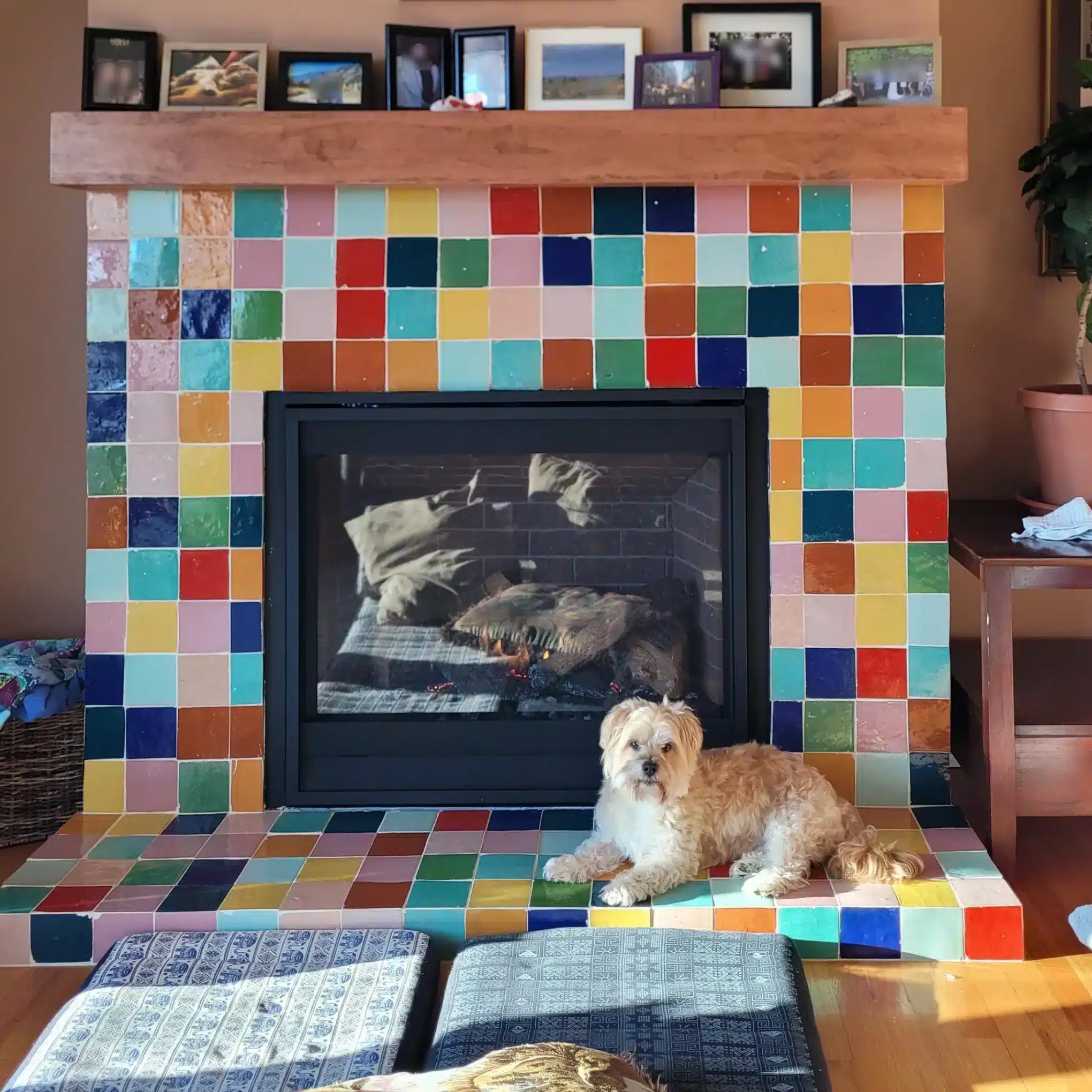
5. The Full-Height Kitchen Backsplash — From Counter to Ceiling
The standard backsplash goes from counter to the bottom of the upper cabinets — a strip of about 45–60cm. Beautiful, but safe. The full-height backsplash — running all the way from the counter to the ceiling — is a different statement entirely.
When you cover the full wall in handmade tiles, the kitchen stops being a room with a nice backsplash and starts being a room built around its backsplash. The tiles become the architecture. Everything else — the cabinets, the counters, the appliances — becomes the frame.
This works especially well in open kitchens where the back wall is visible from the living area. Instead of a wall that fades into the background, you have a focal point that anchors the entire space.
6. Mixed Colour Zellige — The Art of Controlled Chaos
One of my favourite ways to use handmade tiles is in a multi-colour mix. This is a technique deeply rooted in Moroccan design — using tiles in three or four tonal variations of the same colour family, mixed randomly during installation.
The result looks like a single colour from a distance, but reveals infinite depth and variation up close. A “blue” backsplash might contain tiles ranging from pale sky to deep navy, with flashes of teal and green. A “terracotta” backsplash might move between warm salmon, deep brick, and pale blush.
At Charaf Designs, I can curate colour-mix sets specifically for your project — selecting the right range of tones and the right ratio of each to achieve the exact effect you are after.
“The imperfections of a handmade tile are not flaws — they are the signature of the craftsman who made it. That is worth more than any machine can replicate.”— Charaf, Founder of Charaf Designs
7. The Ceiling Backsplash — The New Frontier
If you really want to go beyond what anyone else is doing in 2026, tile your ceiling above the kitchen island. Yes — the ceiling.
This is emerging as one of the most talked-about moves in high-end kitchen design right now. A canopy of handmade tiles above a cooking area creates a visual “room within a room” — defining the cooking zone while creating a dramatic overhead feature that guests will talk about long after dinner is over.
It requires a structural assessment and the right adhesive system, but for a kitchen renovation where the goal is something truly one-of-a-kind, there is nothing quite like it. When you also add one of our handmade Moroccan pendant lamps hanging through the tile ceiling — the effect is truly unforgettable.
How to Choose the Right Handmade Tile for Your Backsplash
With so many beautiful options, choosing can feel overwhelming. Here is the framework I share with every homeowner and designer who comes to me.
Consider your light first
North-facing rooms with little natural light benefit from lighter, more reflective tiles — ivory zellige, pale sage, warm cream. South-facing rooms that flood with light can handle darker, richer tones — deep emerald, cobalt, charcoal — without feeling heavy.
Match the tile mood to the room’s purpose
Kitchens are energetic spaces. Bold colours and high-contrast patterns work well. Bathrooms are retreats. Softer, more tonal palettes — pale blues, warm neutrals, dusty greens — create the sanctuary feeling that 2026 design is all about.
Think about the rest of the room
Handmade tiles are the protagonist — the rest of the room is the supporting cast. If you choose a strong tile, keep the cabinetry, flooring, and furniture quiet. If you want a more layered, maximalist effect, choose a tile that sits in the same colour family as your other materials.
Ask about customisation
One of the greatest advantages of working directly with an artisan like Charaf Designs is that we can create custom colours, sizes, and finishes. If you have a specific shade on a paint swatch or a fabric sample, bring it to us. We will match it in clay and glaze.
Want to see tiles in your space before committing?
I send tile samples directly to homeowners, designers, and architects worldwide. Get in touch and let’s find the perfect tile for your project.
💬 WhatsApp: +212 694 848 682📸 @charafdesigns
Installation Tips for Handmade Tile Backsplashes
A handmade tile is only as good as its installation. Here are the key things to know before your tiler begins work.
Use a flexible adhesive
Handmade tiles, especially zellige, have a slight variation in thickness from tile to tile. A standard rigid adhesive can crack over time as the tiles expand and contract at slightly different rates. Use a flexible, polymer-modified tile adhesive for best results.
Back-butter every tile
In addition to applying adhesive to the wall, spread a thin layer on the back of each tile before pressing it into place. This eliminates air pockets behind the tile, which can lead to cracking or hollow spots over time.
Embrace the irregular grout lines
Handmade tiles are not perfectly uniform, and your grout lines will not be perfectly even — and that is correct. Do not try to force perfect alignment. The slight irregularity is part of the authentic look. Instruct your tiler to work with the variation, not against it.
Seal after grouting
Most handmade tiles, particularly terracotta and unglazed zellige, should be sealed after grouting to protect against staining. Ask Charaf Designs about the right sealer for your specific tile type when you order.
Frequently Asked Questions About Handmade Tile Backsplashes
How much does a handmade tile backsplash cost?
Handmade tiles are a premium product — typically 2 to 4 times the cost of factory-made tiles per square metre. However, the longevity, uniqueness, and visual impact they deliver makes this a long-term investment rather than an expense. Buying directly from an artisan like Charaf Designs, rather than through a retailer, significantly reduces the cost and allows for custom sizing and colour work. Contact us directly for a quote for your specific project.
Are handmade tiles difficult to maintain?
Not at all. Glazed handmade tiles — zellige, for example — are wiped clean just like any other tile. The glaze makes them water-resistant and easy to clean. Unglazed tiles like raw terracotta require sealing but are equally easy to maintain once sealed. We include a care guide with every order from Charaf Designs.
Can I use handmade tiles in a kitchen near heat and steam?
Yes. Handmade tiles have been used in Moroccan kitchens, hammams, and bathhouses for centuries — environments far more extreme than a modern kitchen. The key is proper installation (see the section above) and sealing for any unglazed surfaces. Zellige in particular is highly heat-resistant and handles kitchen conditions beautifully.
How do I order handmade tiles from Charaf Designs?
The simplest way is to message us directly on WhatsApp at +212 694 848 682 or send us a message on Instagram @charafdesigns. Tell us your room dimensions, the colours you are drawn to, and any inspiration images you have. I will personally guide you through the selection and provide a quote including worldwide shipping from Marrakech.
Do you ship internationally?
Yes. Charaf Designs ships handmade tiles, rugs, and lamps worldwide from Marrakech, Morocco. All tiles are carefully packaged to prevent breakage in transit. We include a small percentage of extra tiles in every order to account for any damage during shipping or installation.
Can I get custom colours or sizes?
Absolutely — this is one of our greatest strengths. Because we produce every tile by hand in our Marrakech workshop, we can create custom colour blends, sizes, and surface finishes for specific projects. Many of the interior designers and architects we work with bring us swatches and references, and we produce tiles made precisely to their specifications.
A Wall That Tells Your Story
My grandfather was right. Perfection is forgettable. The slight irregularity of a handmade tile — the way the glaze settles a little differently here, the way the edge is cut a fraction off-square there — is precisely what makes a room feel real. Lived in. Human.
Every tile I make in Marrakech carries that philosophy. When it arrives at your home and is set into the wall of your kitchen or bathroom, it carries something else too: a piece of a craft tradition that has been alive for over a thousand years, made by hands that still know how to honour it.
That is what a backsplash can be, if you let it. Not just a surface. A story.
I would love to help you tell yours.
Ready to start your tile project?
Reach out directly — I personally respond to every message. Let’s find the perfect handmade tile for your space.
💬 WhatsApp: +212 694 848 682📸 @charafdesigns
and we produce tiles made precisely to their specifications.